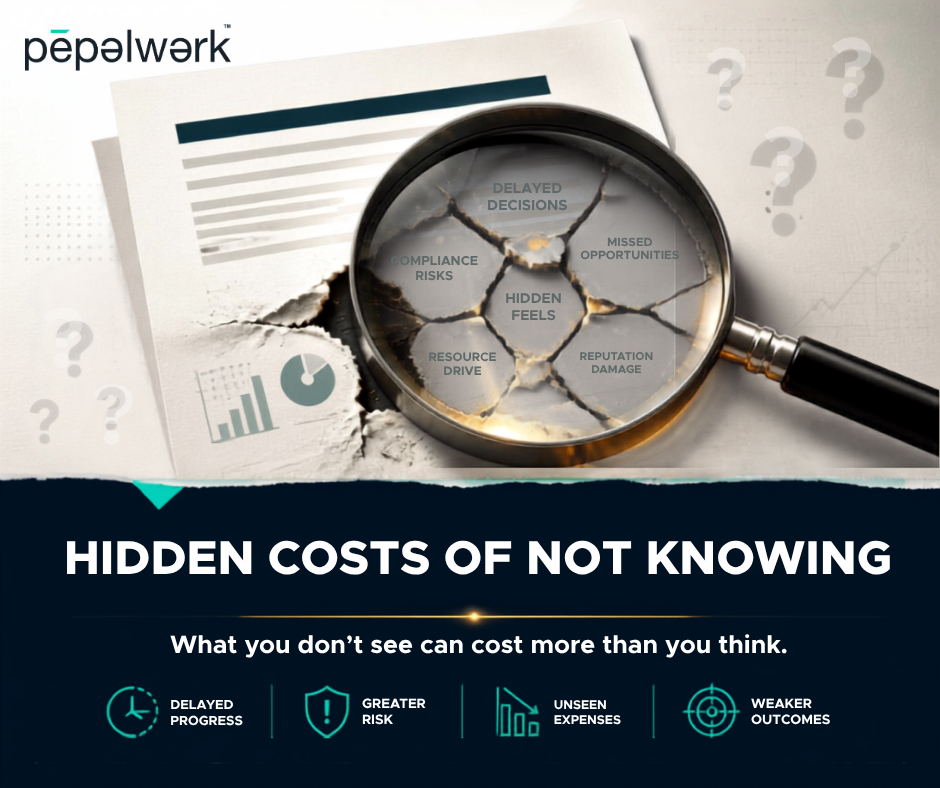
Two-thirds of students in this country will graduate without ever finding out what their own school actually offered them. Not because the programs weren’t there. Not because the funding wasn’t there. Because nobody ever connected the dots between who that student was and what was sitting three hallways away. That’s not an awareness problem. It’s a line item.
The Number Administrators Already Know, Framed the Way It Should Be
Most CTE administrators have seen some version of the stat: roughly two out of three students lack basic awareness of the career and technical education options available to them. It usually gets filed under “communications gap” — something for the counseling office to work on, or a bullet point in next year’s outreach plan. But treat it as a budget question instead of an awareness question, and it looks very different. Every student who never discovers a high-wage, high-demand pathway is a student your district’s CCMR numbers don’t get credit for. Every Perkins V dollar spent on a program nobody heard about is spend that can’t be defended in a Comprehensive Local Needs Assessment. Every graduate who defaults into a low-wage job because welding, robotics maintenance, or fuel cell technology never came up in a conversation is a workforce outcome your community absorbs for the next decade — not just a missed opportunity for one 17-year-old. Awareness gaps don’t stay awareness gaps. They convert into accountability gaps, and accountability gaps show up in board reports.
Why “Tell Them More” Doesn’t Fix It
The instinct is to solve this with more exposure — another career fair, another assembly, another pamphlet in the counseling office. It rarely moves the number, because the problem was never a lack of information. It’s a matching problem. Students aren’t guessing randomly. They’re guessing based on what they can see: what their parents do, what shows up on TV, what their friend group is doing. That’s a reasonable way to make small decisions. It’s a dangerous way to make a decision that shapes the next ten years of someone’s earning potential — especially when the option they never considered might have matched who they actually are far better than the one they picked by default. The gap isn’t between “informed” and “uninformed.” It’s between a decision made on inherited assumptions and a decision made on actual data about the student in front of you.
If your district is still relying on exposure instead of matching, it may be time to measure what students are missing.
What Closing the Gap Actually Requires
Closing it isn’t about volume — it’s about timing and precision. Students need to encounter the right option before the decision window closes, and that option needs to be grounded in something more reliable than a guess: their actual cognitive strengths, working style, and the real-time labor market, not just a list of programs and a survey about what sounds fun.
That’s the shift a platform like pēpelwerk is built around. Instead of asking a student “do you like math,” an AI-driven assessment maps their genuine aptitudes and working style, then cross-references that against real labor market data — surfacing high-skill, high-wage, high-demand careers a student would likely never have found on their own. The output isn’t a worksheet. It’s a Talent Wallet: a portable, growing record of verified skills, completed projects, and preferences the student owns and carries forward, well past graduation.
For an administrator, that same mechanism is also the receipt. It’s the data trail that shows a CLNA committee your programs are aligned to labor market demand. It’s the placement and outcome tracking that turns “we think this worked” into a number you can put in front of a superintendent or school board.
The Real Question Isn’t Awareness. It’s Cost.
The right way to frame this isn’t “how do we make sure students know about CTE.” It’s “what is it costing us that they don’t — and how much of that cost is something we can actually see.”
Districts that can answer that question with real numbers are the ones building programs that outlast the next funding cycle. Districts that can’t are still treating a measurable loss as a communications problem.
Curious what that number looks like for your district? See how pēpelwerk’s AI Career Assistant and Talent Wallet close the awareness gap before it becomes a line item — request a demo.