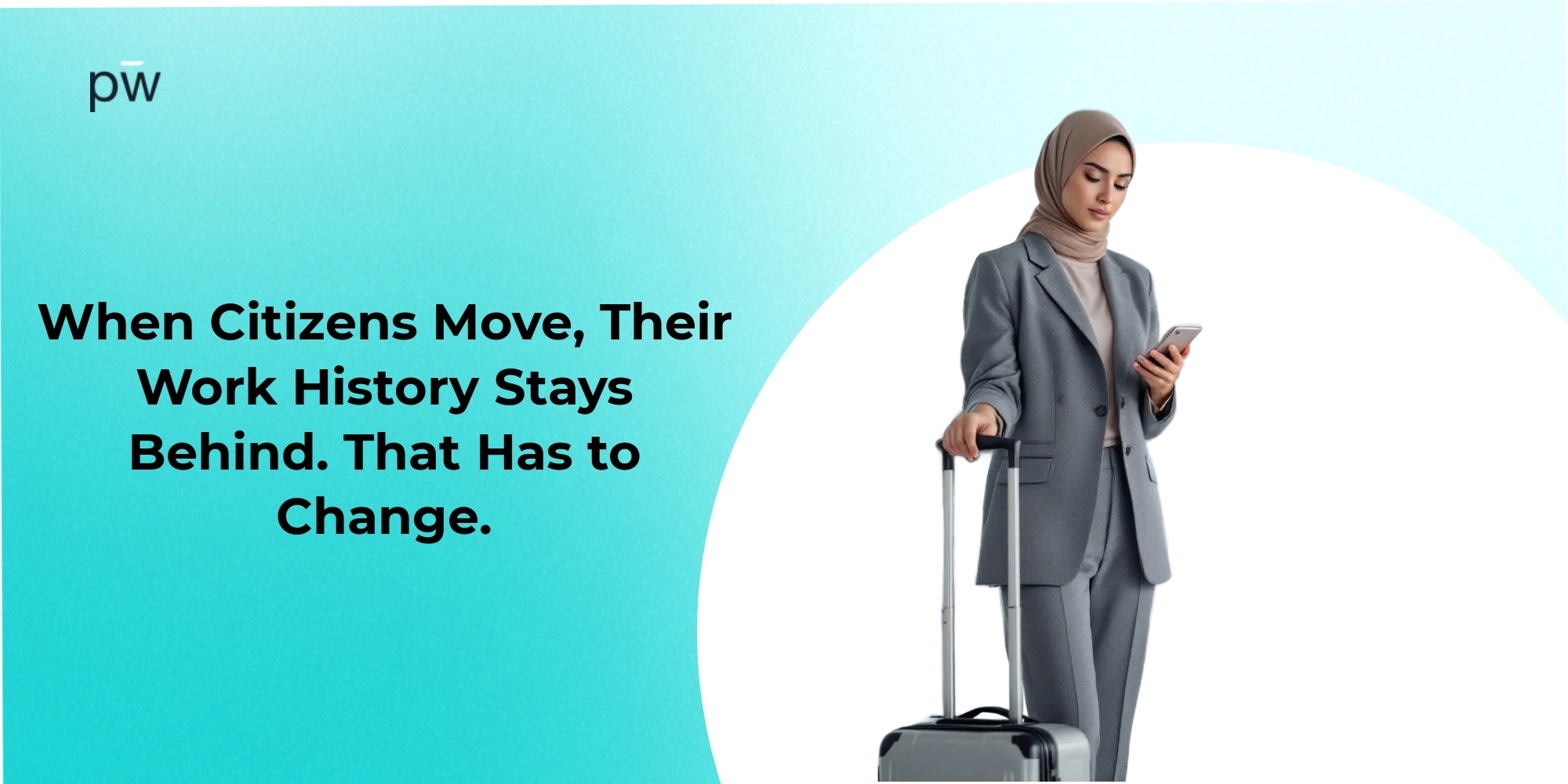
When Citizens Move, Their Work History Stays Behind. That Has to Change.
Imagine Sarah, a dedicated teacher, who has spent years building her career in a small town. Now, she has the opportunity to move across the country for a new life. However, as she packs her bags, she worries about leaving behind more than just her friends and family. Her detailed work history, captured in databases limited to her current state, won’t follow her. It’s a common story, one that leaves talented individuals like Sarah at a disadvantage. And this is where state agency leaders face a significant challenge: the lack of a cross-state view of workforce data.
The Challenge of Workforce Mobility
State agencies are tasked with supporting citizens in their career journeys, but without access to cohesive workforce data, their efforts are hindered. When individuals move, their work history often remains trapped within the borders of their previous state. This fragmentation not only affects the individual but also the employers and agencies trying to make informed decisions. According to a Pew Research study on workforce mobility, this issue is becoming increasingly prevalent as more people relocate for better opportunities.
A fragmented work history can lead to inefficiencies and lost opportunities. Employers miss out on hiring qualified candidates because they lack a complete view of their experience. State leaders struggle to track workforce trends, hindering their ability to make data-driven decisions. The result is a workforce ecosystem that is less effective and less supportive of its citizens.
Bridging the Data Gap with Technology
To address this challenge, state agencies need tools that enable seamless data integration across borders. This is where solutions like pepelwerk's AI Career Assistant for Orgs come into play. By leveraging AI and machine learning, agencies can gain a unified view of workforce data, ensuring that work histories are preserved and accessible no matter where individuals move.
The use of Learning and Employment Records (LERs) offers a standardized way to capture and share work history and educational achievements. This approach not only benefits individual workers but also enhances the ability of agencies to support employers with real-time, actionable insights. As outlined by Brookings, such technological advancements are crucial for building a resilient and adaptable workforce.
A Call to Action for State Agencies
State agencies have an opportunity to transform the way they manage workforce data. By adopting innovative tools, they can ensure that citizens like Sarah have their work histories recognized and valued, no matter where they choose to live. It's a shift that requires foresight and commitment but offers a significant payoff in terms of economic growth and citizen satisfaction.
To see how this transformation can be achieved, book a demo with pēpelwerk today. Discover how integrating AI-driven solutions can bridge the data gap, empowering agency leaders to make informed decisions and support a dynamic workforce.
Looking Ahead: Building a Future-Ready Workforce
The future of work is increasingly mobile, and our systems need to reflect that reality. By taking proactive steps now, state agencies can position themselves as leaders in workforce innovation. The Predictive Analytics and Impact Dashboard offered by pēpelwerk provides agencies with the ability to anticipate trends and respond effectively, ensuring that no citizen's work history is left behind.
In a world where opportunity knows no borders, it's time to ensure that our workforce systems are equally limitless. Together, we can build a future where every move is a step forward, not a step back.